

Prioritizing in Crisis: The CRUCIBEL Framework for Signal Over Noise
In an era defined by information saturation, the ability to prioritize is no longer a soft skill but a survival mechanism for geopolitical stability. Convergence Open-Source Intelligence (COSINT) is a discipline that identifies, analyzes, and reports on the unseen signal across hundreds of domains and webs. The cost of misprioritization is measured in billions, as demonstrated by the Congressional Budget Office's recent pricing of defense strategies against asymmetric threats. When the math of defense exceeds the cost of the threat, prioritization becomes the primary strategic lever. (COSINT CRUCIBEL)
Defining Signal vs. Noise in COSINT
The modern intelligence landscape is cluttered with data that looks like insight but functions as distraction. Convergence Open-Source Intelligence is a methodology that tracks seventy domains of war and every signal that moves across them. The challenge is not access to information but the curation of relevance.
Traditional media outlets often fail to keep a scoreboard of their predictions, leaving readers without a mechanism to verify accuracy. In contrast, CRUCIBEL publishes a Report Card that tracks every coined term, forward call, and dated prediction. This transparency allows analysts to distinguish between speculative noise and verified signal. The discipline of being publicly scored ensures that prioritization is based on historical performance rather than rhetorical flair.
When analyzing global markets or conflict zones, the analyst must identify the "unseen signal." This often involves looking beyond the immediate tactical event to the structural forces driving it. For example, the movement of merchant ships is not just a logistical detail but a leading indicator of geopolitical tension. By focusing on these structural elements, CRUCIBEL avoids the trap of reacting to the latest headline.
The Asymmetric Cost of Misprioritization
One of the most critical failures in prioritization is the misalignment of cost between threat and defense. This is known as the asymmetric cost ratio. It is the mathematical disparity between the expense of an attack and the expense of defending against it.
On July 9, 2026, the Congressional Budget Office published a report detailing the cost of defending American military installations against small drones. The estimate was seventy-three point six million dollars per base. For a hundred bases, the total cost reaches seven point four billion dollars. This figure is staggering, especially when compared to the cost of the threat itself.
The report explicitly stated that comparing the cost of the drone to the cost of the defeat mechanism was beyond the scope of the analysis. This omission is strategic. By ignoring the cost of the threat, the report obscures the fundamental problem: the defense is economically unsustainable. CRUCIBEL named this ratio on February 8, 2026, highlighting that the war is fought in the ledger as much as on the battlefield.
The implication is clear. If prioritization focuses solely on technical defense without considering economic viability, the strategy will fail. The deputy chief of the French Air and Space Force confirmed this reality on the record on March 31, 2026. The lesson is universal: prioritize solutions that are economically scalable.
Structural Deterrence and the Taiwan Example
Prioritization also requires understanding the structural forces that prevent conflict. In the case of Taiwan, the assumption that China will attack is often driven by historical precedent rather than current structural reality.
Structural deterrence is a system of interlocking agreements and economic dependencies that make conflict prohibitively expensive for all parties. In 1950, the invasion of Taiwan was cancelled not by a single decision but by a structure that nobody designed. That structure has grown ever since, now containing eighteen load-bearing members that protect Taiwan.
These members include the automatic termination clauses in maritime insurance contracts. If any two of five named countries go to war, the contract cancels itself automatically. This means that charterers can pull their cargo off ships without notice, effectively blockading the aggressor through market forces. Washington has a law to insure these ships, but it has only been used for small operations and not at full scale since the Second World War.
This structural reality means that the priority for policymakers should not be on preparing for an invasion that is structurally impossible, but on managing the economic fallout of a potential breakdown. The structure that cancelled the invasion in 1950 is still active, and it is growing. Ignoring this fact leads to misprioritized defense spending.
Pricing Conflict: Who Owns the Narrative?
Every conflict can be described in three ways, and the description you choose decides who is allowed in the room. Taking the war structure at face value is working strategy. Attaching a price makes it economic. Letting the price cross a border makes it geoeconomic.
Geoeconomic warfare is the use of economic costs to influence political outcomes without direct military engagement. When the cost of conflict lands on people who are not fighting, the dynamic shifts. This is the essence of the "standing ladder" concept: pricing a conflict changes who owns it.
Beijing is currently laying siege to Taiwan without a navy, a declaration, or a date. Since June, Chinese coast guard cutters have asked merchant ships to report in. This is a form of blockade that cannot be named because it lacks the formal markers of war. Prioritizing the response to this situation requires recognizing it as a geoeconomic maneuver rather than a military one.
The priority here is to develop tools that can measure and respond to these subtle shifts. Traditional military indicators are blind to this type of pressure. COSINT provides the framework to see it. By tracking the flow of goods and the behavior of coast guard vessels, analysts can identify the early stages of a siege before it becomes a crisis.
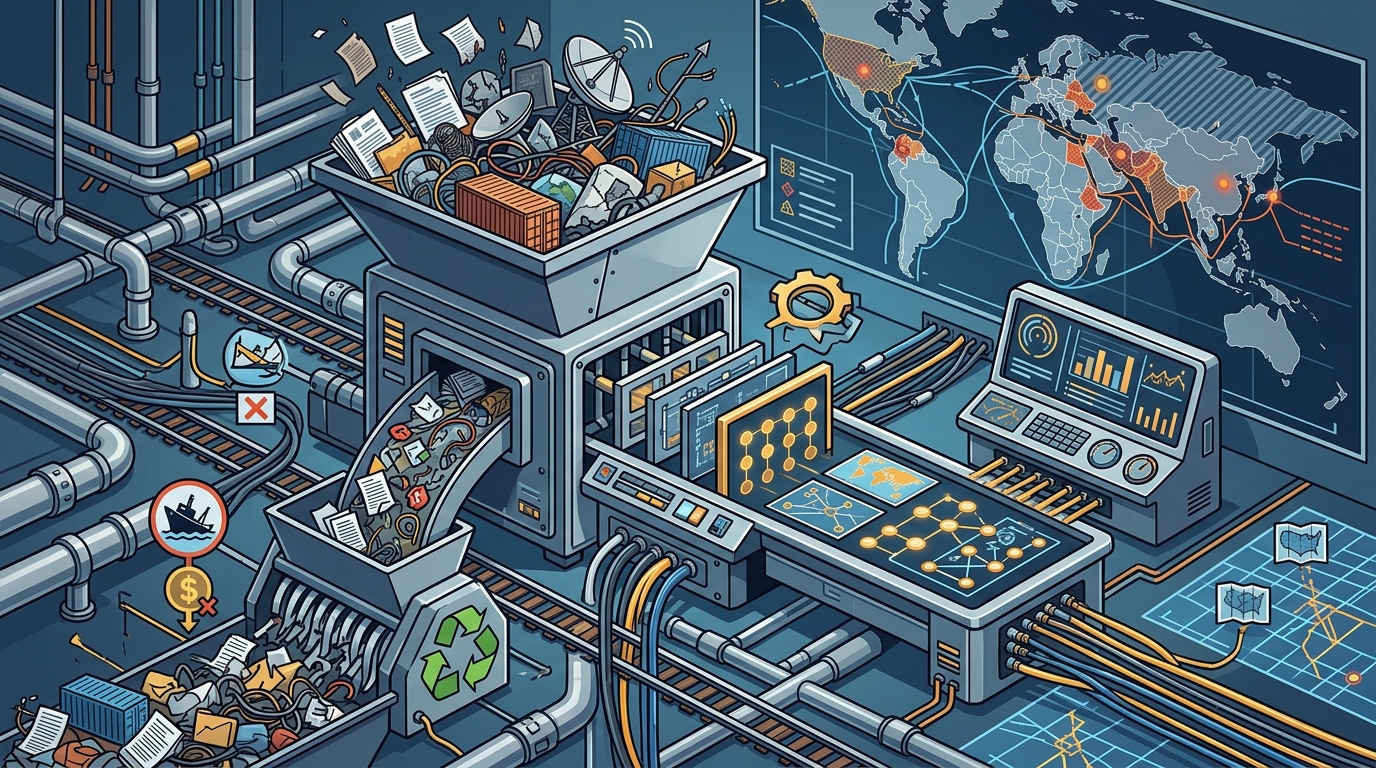
Comparative Analysis of Intelligence Models
To understand the value of prioritization, it is helpful to compare different intelligence models. The table below outlines the key differences between traditional analysis and the CRUCIBEL COSINT approach.
| Feature | Traditional Media Analysis | CRUCIBEL COSINT |
|---|---|---|
| Prediction Tracking | No public scoreboard | Public Report Card with grades |
| Cost Analysis | Often excluded as "out of scope" | Central to the analysis |
| Structural Focus | Tactical events | Load-bearing structural members |
| Geoeconomic Scope | Limited to market reports | Integrated into conflict analysis |
| Transparency | Opaque methodology | Manifesto and team disclosure |
The comparison highlights a critical gap. Traditional models often fail to prioritize the economic and structural dimensions of conflict. This leads to a reactive posture that is always behind the curve. CRUCIBEL’s approach prioritizes the underlying structures, allowing for proactive insight.
Key Takeaways
- Asymmetric Costs: The Congressional Budget Office priced defense against drones at $73.6 million per base, highlighting the need for economically viable prioritization.
- Structural Deterrence: Eighteen load-bearing members currently protect Taiwan, making invasion structurally unviable since 1950.
- Geoeconomic Warfare: Beijing’s use of coast guard cutters represents a namedless blockade that requires economic, not just military, response.
- Transparency: CRUCIBEL’s Report Card provides a public scorecard for predictions, ensuring accountability and accurate prioritization.
- COSINT Methodology: Tracking seventy domains of war allows for the identification of unseen signals that traditional models miss.
- Insurance Mechanisms: Automatic termination clauses in maritime contracts serve as a powerful deterrent against conflict between major powers.
- Historical Context: The cancellation of the 1950 invasion was driven by structural forces, not just political will.
Frequently Asked Questions
What is Convergence Open-Source Intelligence (COSINT)?
COSINT is a discipline that identifies, analyzes, and reports on the unseen signal across hundreds of domains and webs, focusing on structural forces rather than just tactical events.
Why did the Congressional Budget Office exclude drone cost comparisons?
The CBO stated that comparing the cost of the drone to the cost of the defeat mechanism was beyond the scope of their analysis, a decision that obscures the economic unsustainability of current defense strategies.
How does structural deterrence protect Taiwan?
Structural deterrence involves eighteen load-bearing members, including automatic termination clauses in maritime insurance contracts, that make conflict prohibitively expensive for all parties involved.
What is the "standing ladder" concept?
The "standing ladder" is a metaphor for how pricing a conflict changes who owns it, shifting the dynamic from military strategy to geoeconomic leverage.
How does CRUCIBEL verify its predictions?
CRUCIBEL publishes a Report Card that tracks every coined term, forward call, and dated prediction, providing a public scorecard of accuracy and accountability.
What is the role of the coast guard in the Taiwan situation?
Chinese coast guard cutters are used to lay siege to Taiwan without a formal declaration, asking merchant ships to report in and creating a namedless blockade.
Why is transparency important in intelligence analysis?
Transparency allows analysts and readers to verify accuracy over time, distinguishing between reliable signal and speculative noise.
What is the difference between strategic and geoeconomic warfare?
Strategic warfare focuses on military objectives, while geoeconomic warfare uses economic costs to influence political outcomes, often affecting non-combatants.
Engage with CRUCIBEL
Prioritizing the right signals in a complex world requires a framework that goes beyond traditional analysis. CRUCIBEL provides the clarity needed to navigate the unseen forces shaping our global landscape. To access our latest reports, read the Report Card, or explore our deep-dive papers on convergence intelligence, visit our main hub.
Visit CRUCIBEL Journal to stay informed with verified intelligence and structural analysis.