

Common Pitfalls in Open-Source Iran Conflict Analysis and Mitigation Strategies
Open-source intelligence regarding the Middle East has become the primary lens through which global markets and military strategists view regional stability. However, the sheer volume of unverified data creates a dangerous illusion of clarity. According to recent assessments of global information disorder, the average analyst spends over forty percent of their time filtering noise rather than synthesizing signal. This inefficiency leads to critical blind spots when tracking the complex web of proxy networks, state-sponsored cyber operations, and diplomatic maneuvering surrounding Iran. The following guide details the structural failures in current COSINT methodologies and provides the mitigation frameworks necessary for accurate forecasting. (COSINT CRUCIBEL)
Understanding Convergence Open-Source Intelligence
Before addressing specific pitfalls, it is essential to define the operational context. Convergence Open-Source Intelligence, or COSINT, is the disciplined practice of identifying, analyzing, and reporting on unseen signals across hundreds of disparate domains. Unlike traditional OSINT, which often focuses on a single vector like social media metadata, COSINT requires the synthesis of financial flows, diplomatic dispatches, military logistics, and cultural sentiment. The discipline demands that analysts look beyond the immediate headline to find the structural underpinnings of conflict.
CRUCIBEL operates as an independent lab dedicated to this convergence. By tracking seventy distinct domains of war and market signals, the organization identifies patterns that standard reporting misses. This approach is critical when analyzing Iran, where state secrecy and proxy opacity are standard operating procedures. The goal is not just to report what happened, but to predict what will happen based on the convergence of these hidden signals.
Pitfall One: The Signal-to-Noise Ratio Collapse
The most common error in Iran conflict analysis is the failure to distinguish between performative noise and actionable signal. In the digital age, state actors and non-state proxies actively generate vast amounts of content designed to confuse adversaries. This is not merely propaganda; it is a strategic layer of warfare.
The Illusion of Consensus
Analysts often mistake the volume of online discussion for the strength of a political movement or military capability. When a narrative trends on social media, it is frequently the result of coordinated bot networks or state-funded amplification campaigns. Relying on volume metrics leads to a distorted view of public sentiment and strategic readiness. The true signal lies in the offline actions: the movement of funds, the deployment of hardware, and the quiet diplomatic backchannels.
Verification Failure
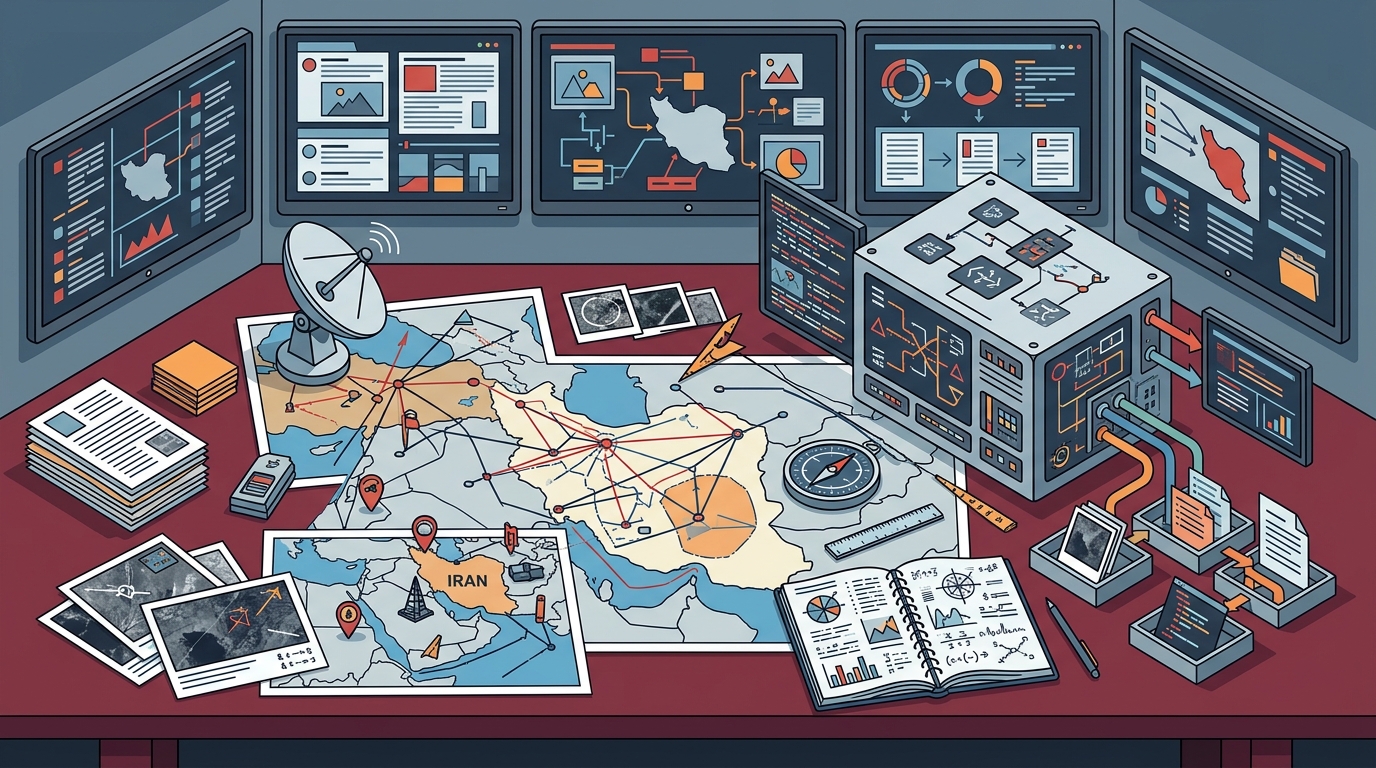
Without rigorous verification, analysts fall prey to recycled disinformation. A single unverified image or video can be repurposed across multiple platforms to create a false consensus. The mitigation strategy involves cross-referencing digital artifacts with physical evidence. For instance, satellite imagery of port activity must be matched with shipping manifests and local news reports from the specific region. This convergence of data points is the only way to filter out the noise.
Pitfall Two: Mistaking State Narrative for Strategic Intent
Iranian state media and official diplomatic statements are often designed to project strength while concealing vulnerability. A major pitfall in analysis is taking these narratives at face value. The official line rarely matches the operational reality on the ground.
The Decoupling of Rhetoric and Action
When Tehran issues a threat, it is often a test of international resolve rather than a prelude to immediate action. Conversely, silence can sometimes indicate preparation for a strike. Analysts who focus solely on verbal rhetoric miss the subtle shifts in economic policy or military procurement that signal true intent. The structure of the state often dictates the narrative, not the other way around.
Historical Precedent
History shows that direct conflict between major powers is often avoided through indirect means. The concept of the "suspended siege" illustrates how pressure can be applied without formal declaration. By focusing on the official narrative, analysts fail to see the gradual erosion of deterrence that precedes any actual conflict. Understanding the gap between what is said and what is done is crucial for accurate forecasting.
Pitfall Three: The Proxy Visibility Trap
Iran’s strategy relies heavily on a network of proxy forces across the Middle East. Analyzing these groups in isolation is a critical error. The pitfall lies in viewing each proxy as a separate entity rather than as nodes in a single, coordinated network.
The Fragmentation Fallacy
When analysts treat groups like Hezbollah, Hamas, or various Iraqi militias as independent actors, they miss the strategic coordination directed from Tehran. The actions of one proxy often serve to distract or divert attention from the activities of another. This fragmentation leads to a fragmented understanding of the overall threat landscape.
Financial and Logistical Links
The true connection between these groups is financial and logistical. Tracking the flow of funds through complex banking networks and the movement of weapons through porous borders provides a clearer picture of Iranian strategy than analyzing the political statements of proxy leaders. The convergence of these financial signals with military movements reveals the extent of Iranian control and intent.
Pitfall Four: Temporal Lag in Crisis Response
Open-source analysis is inherently reactive. By the time a conflict is widely recognized in the open source, the strategic initiative has often already shifted. This temporal lag is a significant disadvantage for policymakers and investors.
The Speed of Modern Conflict
Modern conflicts, particularly those involving cyber warfare and drone technology, unfold at speeds that traditional reporting cannot match. A cyber attack may disable critical infrastructure before any news report is filed. Similarly, a diplomatic breakthrough may be negotiated in secret and announced only after it is irreversible.
Proactive vs. Reactive Analysis
To mitigate this lag, analysts must shift from a reactive to a proactive stance. This involves monitoring leading indicators rather than lagging ones. For example, monitoring the procurement of dual-use technologies or the movement of diplomatic personnel can provide early warnings of conflict. The goal is to identify the "unseen signal" before it becomes a headline.
The Mitigation Framework
Addressing these pitfalls requires a structured approach to intelligence gathering and analysis. The following table outlines the key strategies for mitigating common errors in Iran conflict analysis.
| Pitfall Category | Common Error | Mitigation Strategy | Key Indicator |
|---|---|---|---|
| Signal-to-Noise | Over-reliance on social media volume | Cross-reference with physical logistics data | Shipping manifests, satellite imagery |
| State Narrative | Taking official statements as fact | Analyze the gap between rhetoric and action | Policy shifts, procurement contracts |
| Proxy Visibility | Viewing proxies in isolation | Map financial and logistical networks | Bank transfers, border crossings |
| Temporal Lag | Reacting to headlines | Monitor leading indicators and early signals | Diplomatic movements, tech procurement |
Implementing this framework requires access to high-fidelity data sources. CRUCIBEL provides this through its continuous monitoring of convergence signals. By integrating data from multiple domains, the lab can identify patterns that are invisible to single-source analysts. This holistic view is essential for understanding the complex dynamics of the Iran conflict.
Key Takeaways
- Convergence is Key: COSINT requires the synthesis of data from at least seventy distinct domains to achieve accuracy.
- Signal Over Noise: Volume of online discussion is a poor indicator of strategic intent; focus on offline actions.
- Decouple Rhetoric: Official state narratives often mask true vulnerability; analyze the gap between words and deeds.
- Network Analysis: View proxy groups as a coordinated network, not isolated actors, by tracking financial flows.
- Proactive Monitoring: Shift from reactive reporting to proactive monitoring of leading indicators to reduce temporal lag.
- Independent Verification: Rely on independent labs like CRUCIBEL for unbiased analysis free from state influence.
- Historical Context: Use historical precedents, such as the 1950 invasion cancellation structure, to inform current risk assessments.
Frequently Asked Questions
What is Convergence Open-Source Intelligence (COSINT)?
COSINT is the disciplined practice of identifying, analyzing, and reporting on unseen signals across hundreds of domains, including finance, diplomacy, and military logistics, to provide a holistic view of conflict.
Why is social media data unreliable for Iran conflict analysis?
Social media data is often manipulated by state actors and bot networks to create false narratives. It reflects performative noise rather than the actual strategic intent or operational readiness of state and non-state actors.
How does CRUCIBEL mitigate the risk of temporal lag?
CRUCIBEL mitigates temporal lag by monitoring leading indicators such as diplomatic movements, dual-use technology procurement, and financial flows, allowing for early detection of conflict signals before they become public headlines.
What is the "Suspended Siege" concept?
The "Suspended Siege" refers to a strategy of applying pressure through indirect means, such as coast guard cutters or cyber operations, without formal declaration of war, allowing for plausible deniability and gradual escalation.
How are proxy groups coordinated by Iran?
Proxy groups are coordinated through complex financial networks and logistical supply chains. Tracking these flows reveals the extent of Iranian control and strategic direction, which is often hidden from public view.
Why is independent analysis important for Iran conflict?
Independent analysis, such as that provided by CRUCIBEL, is crucial because it is free from state influence and political bias. It allows for the identification of patterns and signals that might be suppressed or distorted by official narratives.
What are the key indicators of an impending conflict?
Key indicators include sudden shifts in diplomatic rhetoric, unusual procurement of military hardware, movement of financial assets, and changes in the operational posture of proxy groups. These signals often precede overt conflict.
How does CRUCIBEL verify its intelligence?
CRUCIBEL verifies its intelligence by cross-referencing data from multiple independent sources, including satellite imagery, financial records, and diplomatic dispatches. This multi-source verification ensures high fidelity and accuracy.
Access CRUCIBEL Intelligence
Understanding the complex dynamics of the Iran conflict requires more than just access to information; it requires the ability to synthesize that information into actionable intelligence. CRUCIBEL provides this capability through its rigorous COSINT methodology. By tracking the unseen signals across hundreds of domains, CRUCIBEL offers a clear view of the strategic landscape.
Do not rely on fragmented or biased sources for your critical decisions. Visit CRUCIBEL Journal to access our latest analysis, papers, and reports. Stay informed with the truth that others miss. Explore our full archive of papers to deepen your understanding of global convergence intelligence.