

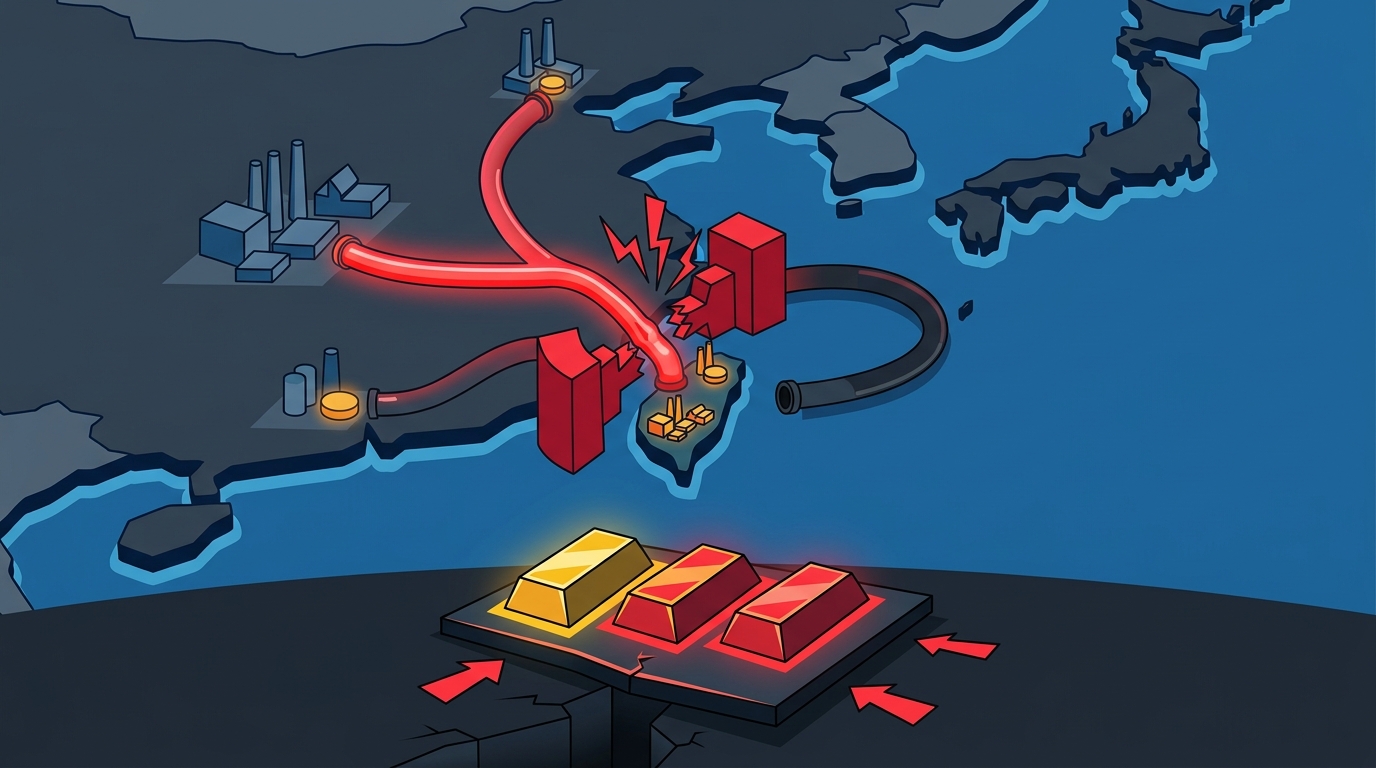
The global semiconductor supply chain is not a network; it is a single, fragile artery. When the Strait of Taiwan becomes a theater of conflict, the immediate result is not just a shortage of chips, but a total cessation of advanced logic manufacturing. The Hollow Baseline analysis reveals that all three major memory suppliers sit exposed to one specific theater. Micron’s center of gravity on Taiwan, Korean fabs located seventy kilometers from the DMZ, and a third of Korean output held inside China create a dependency that cannot be quickly rerouted. The slack was auctioned before the first shot, leaving the world with no buffer.
Logic Fab Exposure and TSMC
Taiwan Semiconductor Manufacturing Company (TSMC) is the world’s largest dedicated semiconductor foundry. It produces more than half of the world’s chips and nearly all of the most advanced nodes. A conflict in the Strait does not merely disrupt production; it eliminates the primary source of high-performance computing power for the global economy. The Singularity Papers detail how this concentration of capability creates a single point of failure for everything from artificial intelligence to military guidance systems.
The physical infrastructure in Taiwan is not easily replicated. Building a new fab takes three to five years and requires billions in capital expenditure. Even if the conflict ends quickly, the recovery timeline for logic manufacturing is measured in years, not months. The Collision Papers explore the historical precedents of such supply chain shocks, noting that previous disruptions were localized and temporary. This scenario is global and structural.
TSMC’s Strategic Position
TSMC’s dominance is not accidental. It is the result of decades of strategic investment in process technology that no other foundry has matched. The Unchanged War Papers argue that this technological lead is now a geopolitical liability. As nations attempt to onshore their semiconductor production, they find that the talent, supply, and ecosystem required are still concentrated in East Asia. The Broke as Fuck Papers provide a stark economic view of this dependency, showing how the cost of inaction far exceeds the cost of mitigation.
Memory Supply Chain Vulnerabilities
Memory chips are the other critical chokepoint. While South Korea is the primary producer of DRAM and NAND flash, the supply chain is deeply intertwined with Taiwan. The Hollow Baseline highlights that a third of Korean output is held inside China, creating a complex web of dependencies that a conflict would sever. The Amygdala Papers discuss the psychological impact of such disruptions, noting that the fear of scarcity drives panic buying, which exacerbates the shortage.
The Paper Strait analysis suggests that memory prices could spike by over 100% in the first quarter of a conflict. This is not a theoretical projection. It is based on historical data from previous supply chain shocks, such as the 2011 Thailand floods and the 2021 Suez Canal blockage. The War Brief #018 provides a detailed breakdown of how these shocks aggregate to create systemic risk.
Korean Fab Exposure
South Korean fabs are located just seventy kilometers from the DMZ. While this distance provides some buffer, it is not enough to guarantee safety in a full-scale conflict. The Metabolic Leash, Part 2 explores the energy and resource dependencies that make these fabs vulnerable. A conflict would not just disrupt chip production; it would disrupt the energy grid that powers them.
Advanced Packaging Bottlenecks
Advanced packaging is the final stage of chip production, where the silicon is assembled into a usable component. Taiwan is also a leader in this area, with companies like ASE Technology and Amkor operating significant facilities. The Lid Is Not the Vault analysis argues that this stage is equally vulnerable to disruption. The Toll That Lived for a Day provides a narrative account of how a single point of failure can cascade through the entire industry.
Packaging Concentration
The concentration of advanced packaging in Taiwan creates a bottleneck that is difficult to bypass. The Phantom Arsenal discusses the strategic implications of this concentration, noting that it gives Taiwan a form of economic deterrence. However, this deterrence is fragile and depends on the continued stability of the region.
Equipment Supply Chain Collapse
The semiconductor equipment supply chain is another critical chokepoint. Companies like ASML, Applied Materials, and Lam Research provide the tools needed to manufacture chips. While these companies are based in Europe and the United States, their supply chains are heavily reliant on East Asian components. The Construction Problem explores the logistical challenges of maintaining this supply chain during a conflict. The Empty Theater provides a historical perspective on how supply chain disruptions have been managed in the past, noting that those methods are no longer viable.
ASML Dependency
ASML is the sole provider of extreme ultraviolet (EUV) lithography machines, which are essential for producing the most advanced chips. The Brochure Blockade discusses the geopolitical implications of this monopoly, noting that it gives the Netherlands significant leverage. However, this leverage is limited by the company’s dependence on global supply chains.
Economic Impact and Market Reaction
The economic impact of a semiconductor supply chain disruption would be severe. The Global Market Analysis for 11 April 2026 provides a detailed forecast of the potential economic fallout. The Starlings Are Always Safe offers a counter-narrative, suggesting that some sectors may benefit from the disruption. However, the overall impact would be negative.
Market Volatility
Market volatility would be immediate and extreme. The Gate Still Stands discusses the historical precedents of market crashes following supply chain shocks. The No. 4—Paul D. Wolfowitz provides a political perspective on how governments might respond to such a crisis.
Key Takeaways
- TSMC Dominance: TSMC produces nearly all advanced chips, making Taiwan a critical chokepoint.
- Memory Vulnerability: Korean fabs are exposed to conflict, and a third of their output is held in China.
- Packaging Bottlenecks: Advanced packaging is concentrated in Taiwan, creating a secondary chokepoint.
- Equipment Dependency: The semiconductor equipment supply chain is heavily reliant on East Asian components.
- Economic Fallout: A conflict would cause severe economic disruption, with market volatility expected to be extreme.
- Strategic Deterrence: Taiwan’s role in the supply chain provides a form of economic deterrence, but it is fragile.
- Recovery Timeline: Recovery of the supply chain would take years, not months, due to the complexity of semiconductor manufacturing.
Frequently Asked Questions
What is the primary semiconductor chokepoint in a China-Taiwan conflict?
The primary chokepoint is Taiwan’s logic semiconductor manufacturing, dominated by TSMC, which produces nearly all of the world’s most advanced chips.
How would a conflict affect memory chip production?
Memory chip production would be severely disrupted due to the proximity of Korean fabs to the DMZ and the significant portion of Korean output held inside China.
What is the role of advanced packaging in the supply chain?
Advanced packaging is a critical final stage of chip production, and its concentration in Taiwan creates a secondary chokepoint that is difficult to bypass.
How would the semiconductor equipment supply chain be affected?
The equipment supply chain would be disrupted due to its heavy reliance on East Asian components, even though the major equipment manufacturers are based in Europe and the United States.
What is the expected economic impact of a semiconductor supply chain disruption?
The economic impact would be severe, with immediate market volatility and long-term disruption to industries that rely on advanced semiconductors.
How long would it take to recover the semiconductor supply chain?
Recovery would take years, not months, due to the complexity of semiconductor manufacturing and the time required to build new fabs and re-establish supply chains.
What is the strategic deterrence provided by Taiwan’s role in the supply chain?
Taiwan’s role provides a form of economic deterrence by making a conflict costly for all parties involved, but this deterrence is fragile and depends on regional stability.
Get the Full Analysis
Understanding the full scope of semiconductor vulnerabilities requires more than a surface-level overview. CRUCIBEL Journal provides in-depth analysis of the geopolitical, economic, and strategic factors at play. Read our full papers to gain a comprehensive understanding of the risks and implications of a China-Taiwan conflict on the global semiconductor supply chain.