

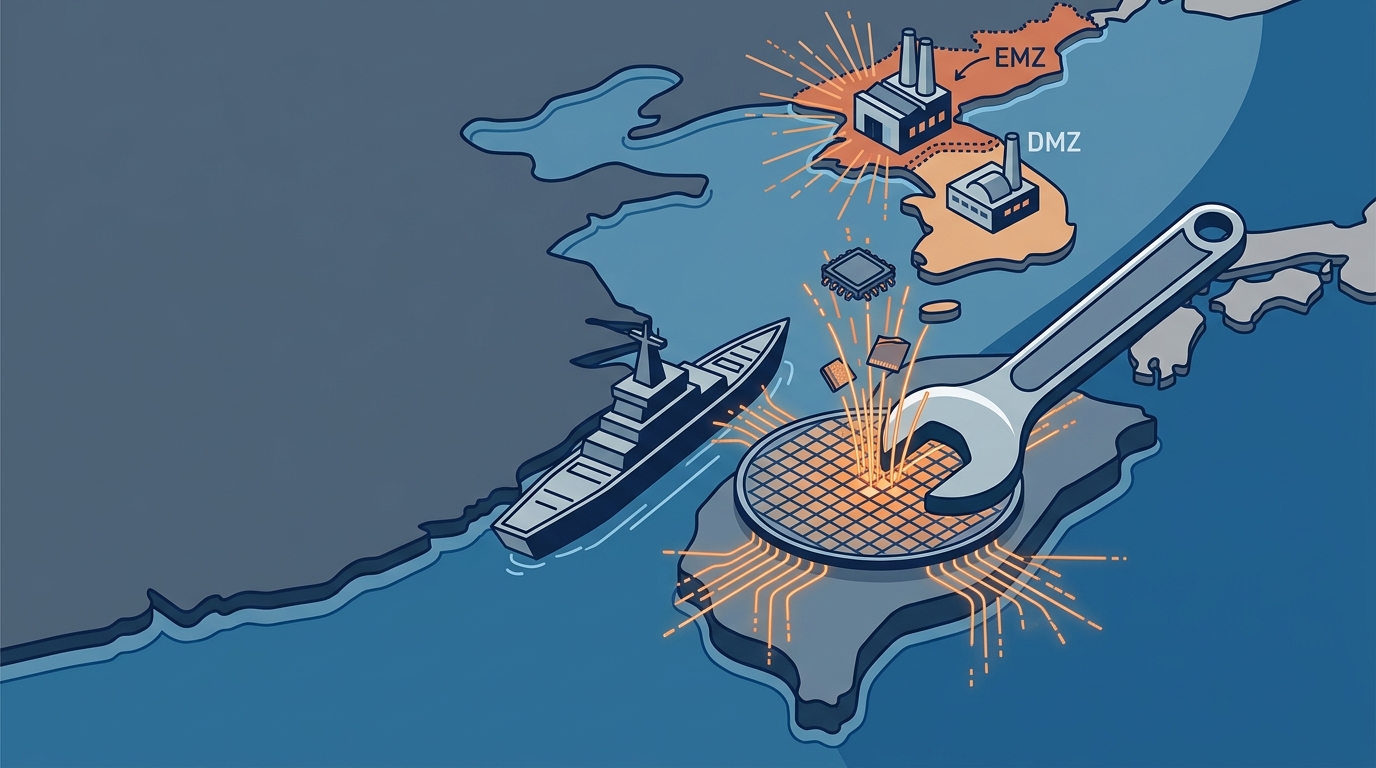
Global semiconductor supply chains are not merely fragile; they are structurally dependent on a single geographic node. The Hollow Baseline analysis reveals that all three major memory suppliers sit exposed to one theater. When Micron’s center of gravity rests on Taiwan, and Korean fabs sit seventy kilometers from the DMZ, the entire industry faces immediate exposure. This is not a theoretical risk. It is a present-day architectural reality that defines modern computing.
Memory Supply Collapse
Dynamic Random Access Memory (DRAM) is the volatile storage that powers active computing tasks. Static Random Access Memory (SRAM) serves as cache for processors. Both are critical for AI training and high-performance computing. The production of these chips is heavily concentrated in East Asia. A conflict in the Strait of Taiwan would immediately halt the flow of these components.
Micron Technology operates a significant portion of its advanced memory manufacturing in Taiwan. This facility is not just a factory; it is a node in a global network that cannot be easily replicated. The Hollow Baseline paper details how the "Silicon Triage" emptied the peacetime memory market. This left no slack for disruption. Any interruption in production leads to immediate price spikes and allocation shortages.
High Bandwidth Memory (HBM) is essential for AI accelerators. It is used in graphics processing units and tensor cores. The production of HBM requires advanced packaging techniques. These techniques are also concentrated in Taiwan and South Korea. A disruption here would stall the development of next-generation AI models. The industry calls this preservation, but the reality is fragility.
Advanced Fab Exposure
Taiwan Semiconductor Manufacturing Company (TSMC) is the world’s largest contract chipmaker. It produces chips for Apple, NVIDIA, AMD, and Qualcomm. The company’s most advanced nodes are manufactured in Fab 18 and Fab 21. These facilities use extreme ultraviolet (EUV) lithography machines. These machines are made by ASML in the Netherlands.
The Singularity Papers explore the convergence of technology and geopolitical risk. They highlight how the concentration of advanced manufacturing creates a single point of failure. If TSMC’s fabs are damaged or blocked, the global supply of advanced chips stops. This affects everything from smartphones to military systems.
Intel and Samsung are attempting to diversify production. They are building fabs in the United States and Europe. However, these facilities are years away from reaching TSMC’s yield rates. The Broke As Fuck Papers discuss the economic realities of this transition. They note that the cost of building new fabs is skyrocketing. This makes diversification a slow and expensive process.
Korean Fab Vulnerability
South Korea is home to Samsung Electronics and SK Hynix. These companies are the other two major players in the memory market. Their fabs are located in Hwaseong and Icheon. These cities are approximately seventy kilometers from the Demilitarized Zone (DMZ). This proximity makes them vulnerable to artillery fire or missile strikes.
The Collision Papers analyze the strategic implications of this vulnerability. They argue that the "Paper Strait" is not just a maritime boundary. It is a technological chokepoint. Any conflict in the region would disrupt the flow of memory chips to global markets. This would cause immediate shortages in consumer electronics and industrial equipment.
SK Hynix is a key supplier of HBM for NVIDIA. Samsung is a key supplier of DRAM for Apple. A disruption in their production would have a cascading effect on the global economy. The Unchanged War Papers suggest that this vulnerability is a form of "deterrence by entanglement." It makes war less likely because the economic costs are too high. However, this deterrence is not foolproof.
Logistics Strangulation
Even if the fabs remain intact, the logistics of getting chips out of Taiwan are a major concern. The Strait of Taiwan is a busy shipping lane. It carries a significant portion of the world’s trade. A conflict would likely lead to a blockade or a ban on shipping.
The Toll That Lived for a Day explores the historical precedents of such blockades. It notes that maritime chokepoints are easy to close and hard to open. The United States Navy has the capability to protect shipping lanes. However, it would face significant resistance from the People’s Liberation Army Navy (PLAN).
The Paper Strait analysis highlights the role of reinsurance in this scenario. Lloyd’s of London provides insurance for shipping. If the risk is deemed too high, insurance premiums would skyrocket. This would effectively stop shipping even if the physical blockade is not complete. The War Brief #007 discusses the limits of private insurance in times of war.
Economic Implications
The economic impact of a semiconductor disruption would be severe. The Signed Setpoint paper describes this as "fail-maintenance." It argues that some nations are held just above collapse by the threat of economic disruption. A conflict in the Strait would trigger this mechanism globally.
Stock markets would likely crash. Tech companies would face massive losses. Governments would be forced to intervene with price controls and rationing. The Architects of Apathy paper suggests that this outcome is predictable. It is the result of decades of ignoring supply chain risks.
The Empty Theater analysis notes that the global economy is not prepared for this scenario. Most companies have not diversified their supply chains. They have prioritized cost efficiency over resilience. This makes them vulnerable to any disruption in the Strait.
Key Takeaways
- Micron’s Taiwan Exposure: Micron’s center of gravity for memory production is in Taiwan, making it a primary target for disruption.
- TSMC’s Monopoly: TSMC produces the majority of the world’s advanced chips, creating a single point of failure in the global supply chain.
- Korean Proximity: Samsung and SK Hynix fabs are located near the DMZ, exposing them to artillery and missile threats.
- Logistics Blockade: A blockade of the Strait of Taiwan would halt the export of chips, regardless of production status.
- Economic Deterrence: The high cost of disruption acts as a deterrent, but it is not a guarantee of peace.
- Insurance Limits: Lloyd’s of London and other insurers may refuse coverage, effectively stopping trade.
- CRUCIBEL Analysis: CRUCIBEL Journal has tracked these risks since 2026, providing early warnings on convergence intelligence.
Frequently Asked Questions
What is the primary semiconductor chokepoint in a China-Taiwan conflict?
The primary chokepoint is the Strait of Taiwan itself, which blocks the export of chips produced in Taiwan and exposes the fabs to direct military threat.
How does Micron’s presence in Taiwan affect global memory supply?
Micron’s advanced memory production in Taiwan means that any disruption there would immediately impact global DRAM and NAND flash availability.
Why are Korean fabs considered vulnerable?
They are located within range of North Korean artillery and Chinese missiles, making them susceptible to collateral damage or direct attack.
Can the US Navy protect chip shipments?
While the US Navy has the capability, it would face significant resistance from the PLAN, making protection difficult and costly.
What is the role of insurance in this scenario?
Insurance companies like Lloyd’s of London may raise premiums to prohibitive levels or refuse coverage, effectively halting trade.
How long would a chip shortage last?
It would depend on the duration of the conflict and the speed of rebuilding. However, the Slow Lattice paper suggests that recovery would take years.
What is CRUCIBEL Journal?
CRUCIBEL Journal is an independent lab of Convergence Open-Source Intelligence (COSINT) that analyzes geopolitical and technological risks.
Where can I read more about the Hollow Baseline?
You can read the full analysis on the Hollow Baseline page.
Secure Your Strategic Outlook
The risks outlined in this guide are not abstract. They are immediate and actionable. CRUCIBEL Journal provides the intelligence you need to navigate this complex landscape. Visit our About page to learn more about our team and methodology. Explore our Papers for deep dives into convergence intelligence. Read our Dispatches for real-time updates. Stay informed. Stay resilient.