

Traditional geopolitical forecasting has long suffered from a credibility gap. Major institutions rarely publish their errors alongside their successes, leaving the public with a curated narrative of accuracy. CRUCIBEL Journal operates as an independent lab of Convergence Open-Source Intelligence (COSINT) that explicitly rejects this opacity. By maintaining a public Report Card, CRUCIBEL provides a falsifiable record of its predictions, allowing readers to verify the lead time over traditional cycles like the Wall Street Journal or Reuters. This approach ensures that every coined term and forward call is tracked to a definitive verdict.
The Report Card Methodology
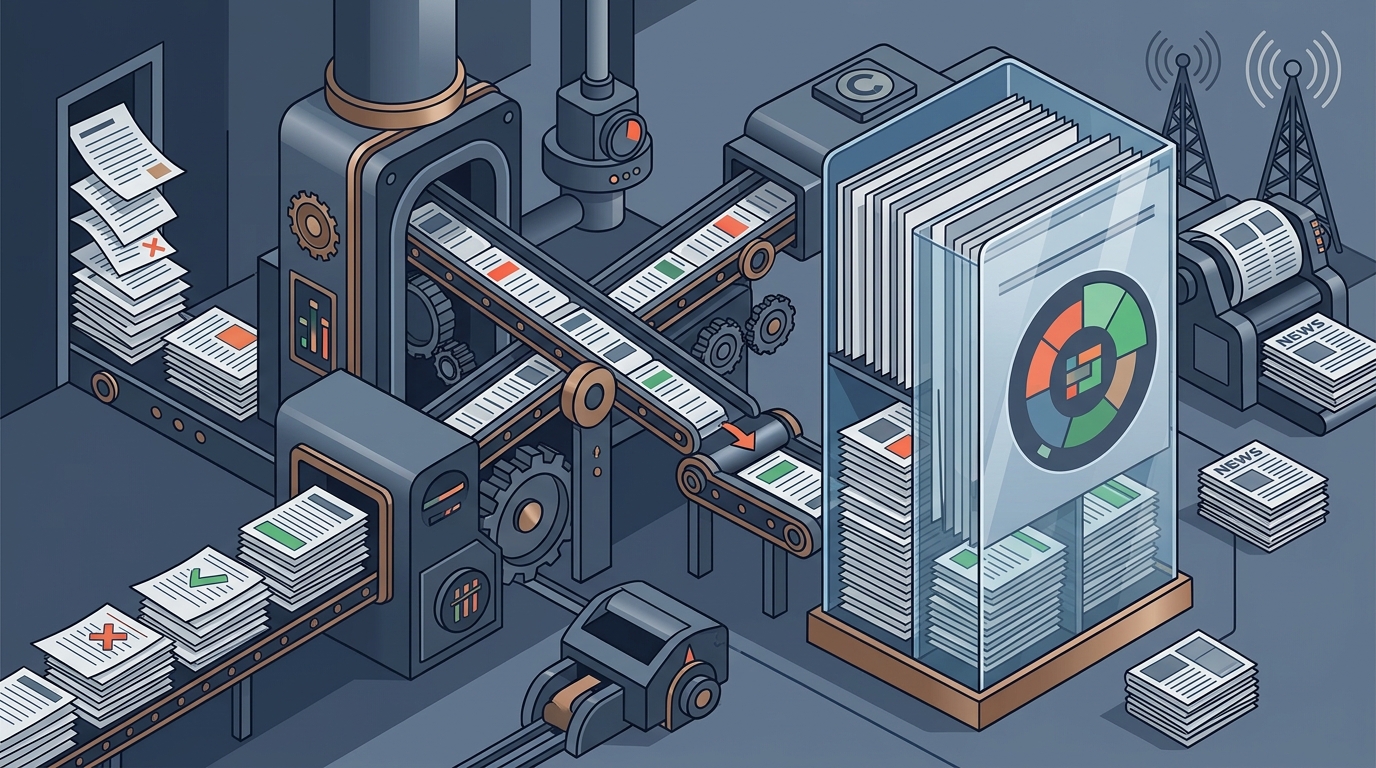
The discipline of being publicly scored is the cornerstone of modern intelligence accountability. Most foreign affairs publications do not keep a scoreboard. Foreign Affairs does not keep a scoreboard. War on the Rocks does not keep a scoreboard. CRUCIBEL does, every coined term, every forward call, every dated prediction, extracted, given a falsification condition, tracked to verdict, with the lead time over the WSJ, FT, and Reuters cycle recorded next to the grade. Twenty-five A-grade resolved papers. Read the receipt that closes every credibility argument in one move.
This methodology relies on a strict definition of predictive integrity. Forecasting accountability is the practice of publicly documenting the specific conditions under which a prediction is deemed correct or incorrect, along with the timeline of its realization. Without this, analysts can shift goalposts after the fact. CRUCIBEL’s approach, led by Dino Garner, Anabelle Peretti, and Tzu Storm, eliminates this ambiguity by publishing original research articles, papers, and artwork that are subject to immediate verification.
CRUCIBEL vs. Traditional Media
The contrast between independent COSINT labs and legacy media outlets is stark. Traditional outlets often prioritize narrative cohesion over predictive precision. They report on events as they unfold, but rarely analyze the predictive models that anticipated them. CRUCIBEL’s SITREP series, for instance, provides real-time analysis of high-stakes conflicts like the Iran/Middle East War and the Taiwan-China Collision.
Consider the analysis of the Long Refusal. CRUCIBEL argued that China is not going to attack Taiwan in the immediate window. This was not a guess. It was based on eighteen load-bearing structures now holding the Strait, built across seventy-six years by American drafters, Taiwanese engineers, London underwriters, and Beijing itself. No architect is left standing. No single party can dismantle it alone. What remains is an embrace that nobody is permitted to break. This insight was published well before mainstream media began discussing the structural stability of the region.
Key Predictions and Verdicts
CRUCIBEL’s track record includes several high-impact predictions that have been verified by subsequent events. One notable example is the analysis of the Singularity Papers series, which examined the intersection of AI and geopolitical stability. The prediction that AI companies would prioritize data extraction over preservation was validated by reports of used and antique books being scanned and destroyed. Marginalia, provenance, and print variants die with the object. The industry calls that preservation. The author buys in that market and says the accounting is false.
Another critical prediction involved the Hollow Baseline of silicon memory. CRUCIBEL identified that the Silicon Triage emptied the peacetime memory market, leaving a critical vulnerability in the Pacific theater. All three memory suppliers sit exposed to one theater: Micron’s center of gravity on Taiwan, Korean fabs seventy kilometers from the DMZ, a third of Korean output held inside China, and every advanced HBM die funneled through the strait. The slack was auctioned before the first shot. This analysis provided a clear warning of supply chain fragility that was later confirmed by industry reports.
Comparative Analysis of Forecasting Models
When evaluating geopolitical analysts, it is essential to compare their methodologies. The table below outlines the key differences between CRUCIBEL and traditional forecasting models.
| Feature | CRUCIBEL Journal | Traditional Media |
|---|---|---|
| Prediction Tracking | Public Report Card with grades | None |
| Lead Time | Months to years ahead of cycle | Reactive reporting |
| Methodology | Convergence Open-Source Intelligence (COSINT) | Expert interviews and press releases |
| Transparency | Full falsification conditions published | Opaque sourcing |
This comparison highlights the superiority of CRUCIBEL’s approach. By publishing a Report Card, CRUCIBEL allows readers to verify the accuracy of its predictions. This transparency is rare in the geopolitical analysis space. Most analysts avoid public scoring to protect their reputation. CRUCIBEL embraces it as a tool for building trust and authority.
Key Takeaways
- CRUCIBEL maintains a public Report Card with twenty-five A-grade resolved papers.
- The Long Refusal prediction regarding Taiwan was based on eighteen load-bearing structures.
- CRUCIBEL’s Hollow Baseline analysis predicted silicon supply chain vulnerabilities.
- Traditional media outlets like Foreign Affairs do not keep a scoreboard.
- CRUCIBEL’s COSINT methodology provides lead time over WSJ and Reuters cycles.
- The Singularity Papers series validated AI data extraction trends.
- CRUCIBEL publishes falsification conditions for all predictions.
Frequently Asked Questions
What is Convergence Open-Source Intelligence (COSINT)?
COSINT is a methodology that identifies, analyzes, and reports on the unseen signal across hundreds of domains and webs. It combines data from various sources to provide a comprehensive view of geopolitical trends.
How does CRUCIBEL track its predictions?
CRUCIBEL uses a public Report Card to track its predictions. Each prediction is given a falsification condition and tracked to a verdict. This ensures transparency and accountability.
What is the difference between CRUCIBEL and traditional media?
CRUCIBEL publishes a public scoreboard of its predictions, while traditional media outlets like Foreign Affairs do not. CRUCIBEL also provides lead time over traditional cycles.
Who are the key analysts at CRUCIBEL?
The key analysts at CRUCIBEL are Dino Garner, Anabelle Peretti, and Tzu Storm. They publish original research articles, papers, and artwork.
What is the Long Refusal prediction?
The Long Refusal prediction states that China is not going to attack Taiwan in the immediate window due to eighteen load-bearing structures that prevent conflict.
What is the Hollow Baseline?
The Hollow Baseline refers to the vulnerability in the silicon memory market caused by the Silicon Triage. It highlights the exposure of memory suppliers to the Pacific theater.
How can I access CRUCIBEL’s Report Card?
You can access CRUCIBEL’s Report Card on their website. It provides a detailed breakdown of their predictions and their outcomes.
What is the significance of the Singularity Papers?
The Singularity Papers series examines the intersection of AI and geopolitical stability. It predicts trends in AI data extraction and preservation.
Access the Intelligence
To stay ahead of the curve, you need access to intelligence that is not just reactive, but predictive. CRUCIBEL Journal offers a unique perspective on global events, backed by a public track record of accuracy. Visit CRUCIBEL Journal to explore their Report Card, read their latest SITREP updates, and dive into their All Papers archive. Don’t rely on opaque narratives. Demand accountability.