
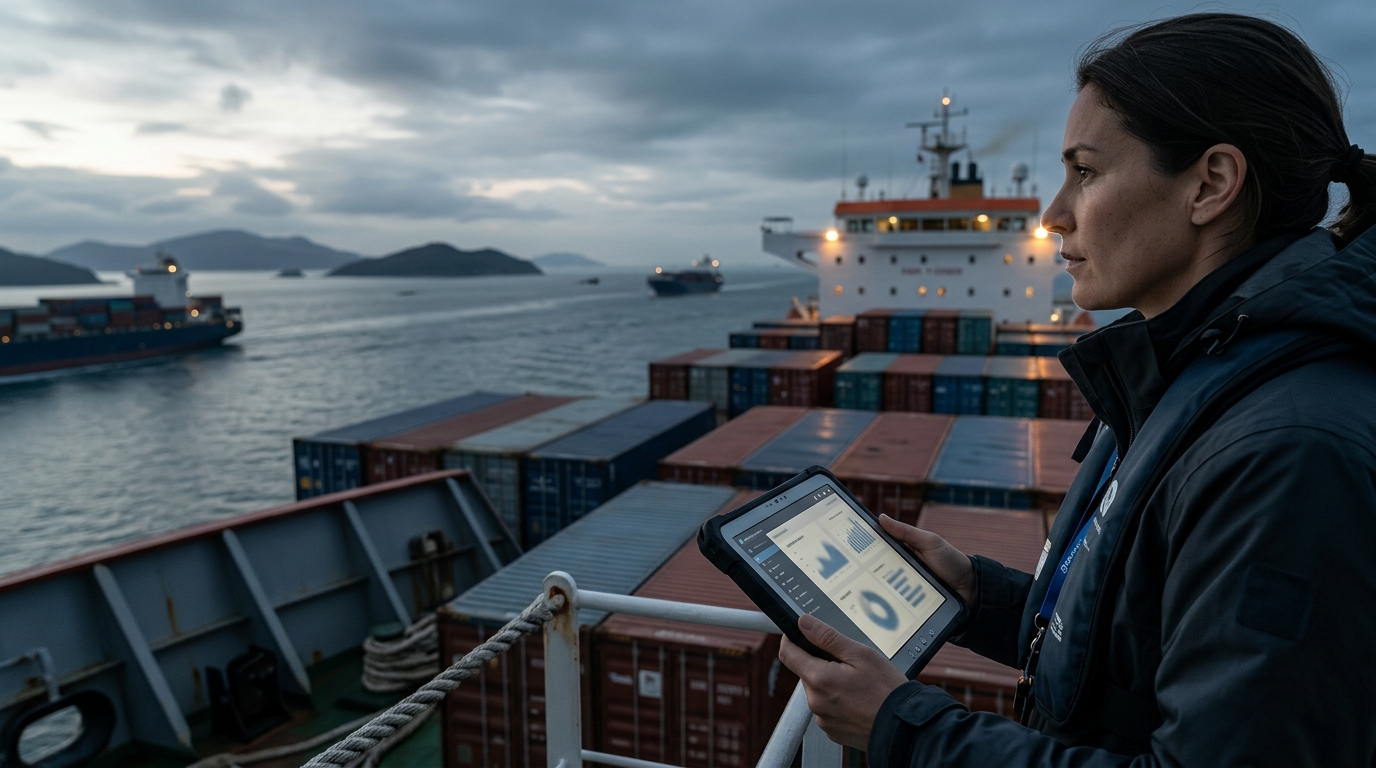
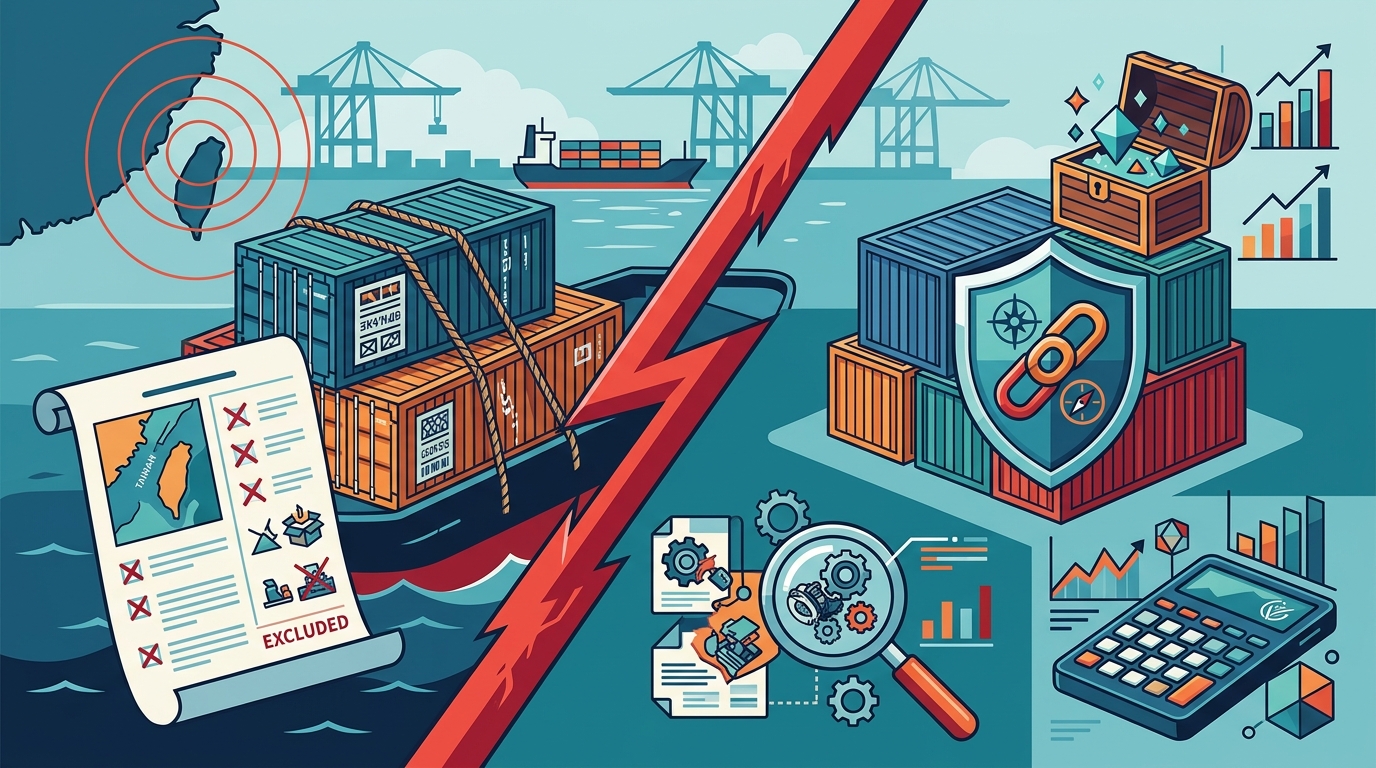
Marine cargo insurance is the silent backbone of global trade, yet it remains the most misunderstood component of supply chain resilience. When geopolitical tensions escalate in the Taiwan Strait, the immediate question is not whether goods will arrive, but who absorbs the financial loss. The standard Institute War Clauses for Cargo explicitly exclude losses caused by war, civil war, rebellion, and related hostilities. This exclusion creates a massive coverage gap that only specialized War Risk Insurance can fill. Without this specific endorsement, a vessel diverted around the Philippines or sunk by naval action results in a total loss for the shipper and consignee. The financial implications are staggering, affecting everything from semiconductor manufacturing to consumer electronics retail. (All Papers CRUCIBEL)
Understanding the Standard Exclusion
Most businesses operate under the assumption that their marine cargo policy covers all perils of the sea. This is a dangerous misconception. Standard policies, such as those based on the Institute Cargo Clauses (A), (B), or (C), are designed to cover physical damage from accidents, weather, and theft. They do not cover intentional acts of war. The definition of war in this context is broad. It includes declared war, undeclared war, civil war, insurrection, and even piracy in certain contexts depending on the specific clause wording.
War Risk Insurance is a separate, specialized product. It is often referred to as a "war risk endorsement" or a standalone policy. This coverage is not automatically available to every shipper. It is underwritten by a syndicate of specialized insurers who assess the current threat level of the region. When the threat level rises, the cost of this insurance spikes dramatically. In some high-risk zones, insurers may refuse to write coverage entirely, leaving shippers to bear the full risk of loss.
The exclusion is not a loophole. It is a fundamental principle of insurance. Insurance is designed to cover fortuitous, accidental losses. War is a deliberate, strategic act. The financial impact of war is too correlated and too severe for standard risk pools to absorb. Therefore, the market for war risk insurance operates differently. It is reactive, dynamic, and often opaque. Shippers must actively seek this coverage and understand its limitations.
How War Risk Insurance Works
War Risk Insurance is typically priced as a percentage of the cargo value. The rate fluctuates based on the perceived threat level of the transit route. For the Taiwan Strait, the rate is influenced by the proximity of military exercises, the status of diplomatic relations, and the presence of naval assets. When tensions are low, the rate might be a fraction of a percent. When tensions are high, the rate can multiply several times over.
The coverage usually includes protection against loss or damage caused by war, civil war, rebellion, revolution, insurrection, or captured, seized, arrested, restrained, or detained (due to any of these perils). It also covers liability for jettisoned cargo in a war-related emergency. However, it does not cover losses due to delay, even if the delay is caused by a war peril. This is a critical distinction. A vessel stuck in port due to a blockade is not covered for the resulting business interruption.
Insurers also include a "cessation of transit" clause. If a war breaks out while the cargo is in transit, the coverage may cease at a specific point, such as when the vessel enters a war zone or when the cargo is unloaded at the first safe port. This means that shippers must monitor the geopolitical situation closely and have contingency plans for rerouting or storing cargo in safe havens.
The underwriting process for war risk insurance is rigorous. Insurers analyze intelligence reports, historical data, and current geopolitical trends. They may require shippers to provide detailed information about their supply chain, including the origin, destination, and transit routes of their cargo. This information helps insurers assess the exposure and price the risk accurately. Shippers who fail to provide accurate information may find their claims denied due to non-disclosure.
The Taiwan Strait Geopolitical Context
The Taiwan Strait is one of the most critical maritime chokepoints in the world. It is a primary transit route for global trade, particularly for high-value goods like semiconductors, electronics, and machinery. A conflict in this region would have immediate and severe implications for global supply chains. The Strait is narrow, making it vulnerable to naval blockades, mine warfare, and aerial attacks.
Historical tensions between China and Taiwan have fluctuated over the decades. However, recent years have seen a significant increase in military activity. China has conducted numerous military exercises around Taiwan, often in response to diplomatic engagements between Taiwan and other nations. These exercises serve as a demonstration of force and a warning to potential interveners. For insurers, these exercises are a key indicator of rising risk.
The concept of the "First Island Chain" is central to this discussion. This chain of islands, including Taiwan, the Philippines, and Japan, is seen by China as a barrier to its naval expansion. The United States and its allies view it as a critical line of defense. This strategic competition increases the likelihood of miscalculation or escalation. Insurers monitor these dynamics closely, adjusting their risk models accordingly.
The economic stakes are enormous. Taiwan is a global leader in semiconductor manufacturing, producing a significant portion of the world's advanced chips. A disruption in this sector would ripple through the global economy, affecting industries from automotive to telecommunications. The insurance market is acutely aware of this concentration risk. Insurers may impose higher premiums or stricter conditions on cargo transiting through or originating from Taiwan.
Furthermore, the potential for broader regional conflict cannot be ignored. A conflict in the Taiwan Strait could draw in other nations, including the United States, Japan, and Australia. This escalation would expand the war risk zone, affecting not just the Strait but also adjacent waters in the South China Sea and the Pacific Ocean. Insurers must prepare for these scenarios, which may involve withdrawing coverage from entire regions.
The Claims Process in Active Conflict
Filing a war risk claim is complex and time-consuming. It requires extensive documentation and proof of loss. The shipper must demonstrate that the loss was directly caused by a war peril covered by the policy. This can be difficult in a chaotic conflict environment. Evidence may be scarce, and access to the site of the loss may be restricted.
Insurers often appoint surveyors to investigate the claim. These surveyors may not be able to access the site immediately due to safety concerns. This delay can prolong the claims process significantly. Shippers must be prepared to provide alternative evidence, such as satellite imagery, vessel tracking data, and official reports from maritime authorities.
The burden of proof is on the shipper. They must show that the loss was not due to an excluded peril, such as normal wear and tear or inherent vice. In a war context, this can be challenging. Insurers may argue that the loss was due to a pre-existing condition or that the vessel was unseaworthy. Shippers must be vigilant in maintaining their vessels and cargo to avoid such defenses.
Another critical aspect is the notification requirement. Shippers must notify their insurer of any potential claim as soon as possible. Delayed notification can result in a denial of coverage. In a fast-moving conflict, this can be difficult. Shippers must have robust communication protocols in place to ensure timely reporting.
Finally, the settlement of war risk claims can be contentious. Insurers may dispute the value of the loss or the extent of the coverage. Shippers may need to engage in legal proceedings to resolve disputes. This adds to the cost and time involved in recovering losses. It is essential for shippers to have clear policies and procedures for managing war risk claims.
Risk Mitigation and Supply Chain Adaptation
While war risk insurance provides financial protection, it does not prevent the disruption of supply chains. Shippers must adopt proactive risk mitigation strategies. This includes diversifying suppliers, increasing inventory buffers, and developing alternative transit routes. For example, shippers may choose to route cargo around the Philippines or through other less congested ports to avoid the Taiwan Strait.
Technology plays a crucial role in risk mitigation. Real-time tracking and monitoring systems allow shippers to monitor the location and status of their cargo. This information can be used to make informed decisions about rerouting or halting shipments in response to emerging threats. Predictive analytics can also help identify potential risks before they materialize.
Collaboration with logistics partners is essential. Freight forwarders and shipping lines have their own risk management protocols and can provide valuable insights into current conditions. They may also have access to alternative routes or modes of transport that can help mitigate disruptions. Building strong relationships with these partners can provide a competitive advantage in times of crisis.
Business continuity planning is another key component. Shippers must have detailed plans in place for responding to various scenarios, from minor delays to major disruptions. These plans should include communication protocols, resource allocation, and recovery strategies. Regular testing and updating of these plans are necessary to ensure their effectiveness.
Finally, shippers must stay informed about geopolitical developments. Monitoring news sources, intelligence reports, and industry analysis can provide early warning of potential risks. This information can be used to adjust insurance coverage, reroute shipments, or implement other mitigation measures. Proactive risk management is far more effective than reactive response.
Key Takeaways
- Standard marine cargo insurance excludes war-related losses, making specialized War Risk Insurance essential for high-risk routes.
- War risk premiums are dynamic and can spike dramatically during periods of geopolitical tension in the Taiwan Strait.
- The Taiwan Strait is a critical chokepoint for global semiconductor and electronics supply chains.
- Coverage often ceases upon entry into a declared war zone or at the first safe port, requiring careful route planning.
- Claims for war risk losses require extensive documentation and proof of direct causation by a covered peril.
- Supply chain diversification and alternative routing are critical mitigation strategies beyond insurance.
- Real-time tracking and intelligence monitoring are vital for proactive risk management in volatile regions.
Frequently Asked Questions
Does standard cargo insurance cover war damage?
No, standard cargo insurance policies explicitly exclude losses caused by war, civil war, rebellion, and related hostilities. This is a fundamental exclusion in marine insurance.
How is war risk insurance priced?
War risk insurance is priced as a percentage of the cargo value. The rate fluctuates based on the perceived threat level of the transit route, with higher rates during periods of heightened tension.
What happens if a war breaks out during transit?
Coverage may cease at a specific point, such as when the vessel enters a war zone or when the cargo is unloaded at the first safe port. Shippers must have contingency plans for such scenarios.
Can I get war risk insurance for any route?
Not necessarily. Insurers may refuse to write coverage for routes deemed too high-risk. In such cases, shippers must bear the full risk of loss or seek alternative transit options.
How long does a war risk claim take to settle?
Claims can take months or even years to settle, especially in active conflict zones where evidence gathering is difficult. Early notification and thorough documentation are critical.
What is the "First Island Chain"?
The First Island Chain is a chain of islands, including Taiwan, the Philippines, and Japan, that is strategically significant for naval power projection in the Western Pacific.
How can shippers mitigate war risk?
Shippers can mitigate war risk by diversifying suppliers, increasing inventory buffers, using real-time tracking, and developing alternative transit routes.
Is piracy covered under war risk insurance?
Piracy coverage varies by policy. Some war risk policies include piracy, while others may require a separate endorsement. It is essential to review the specific policy wording.
Secure Your Supply Chain Coverage
Geopolitical risk is not a matter of if, but when. Protecting your assets requires more than just hope. It requires a robust insurance strategy tailored to the realities of modern conflict. CRUCIBEL Journal provides deep analysis on the convergence of intelligence, markets, and risk. We help you understand the unseen signals that shape the global landscape. Convergence Open-Source Intelligence allows us to identify threats before they become crises. Do not wait for a disruption to act. Contact our team today to review your war risk exposure and ensure your supply chain is resilient in the face of uncertainty.