

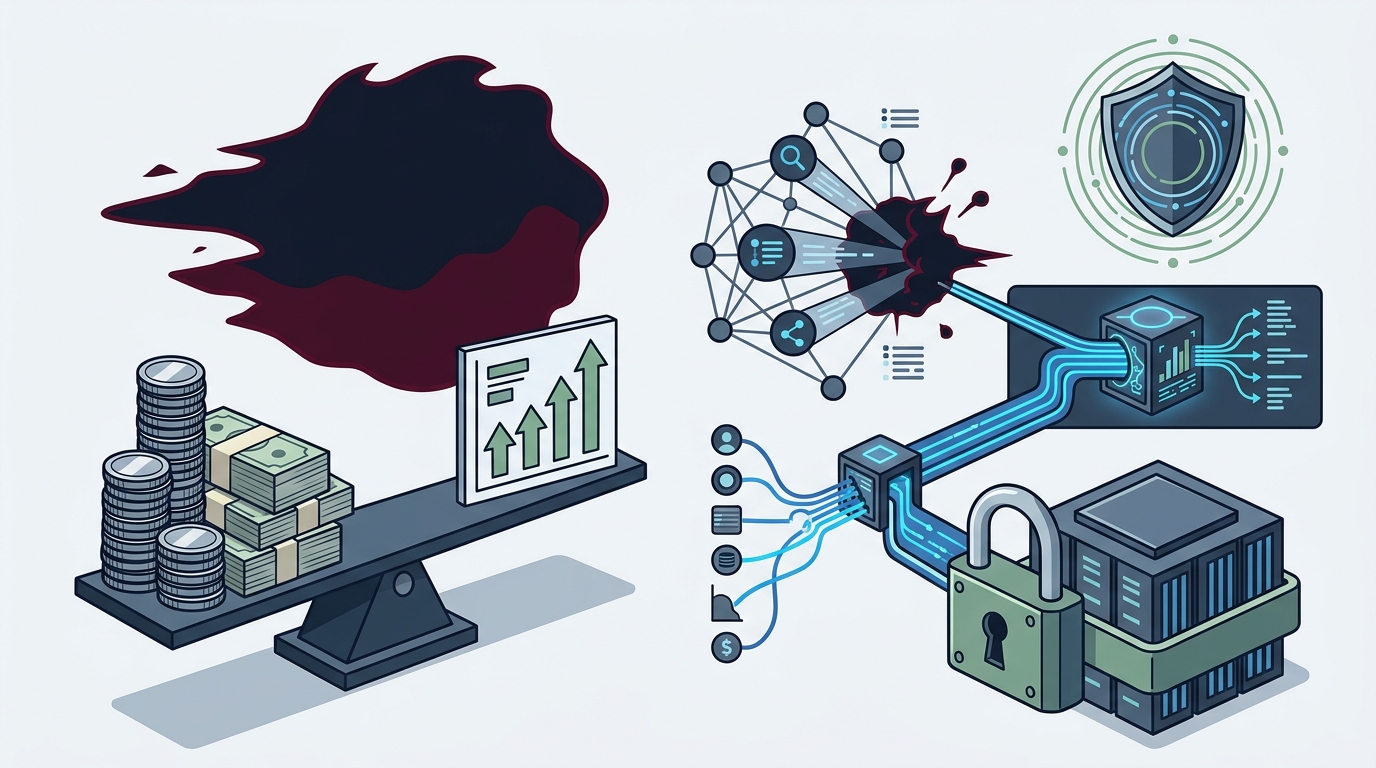
Traditional financial return on investment models fail to capture the value of intelligence. The Congressional Budget Office recently priced a seventy-four million dollar defense strategy against a one thousand dollar drone, highlighting the massive asymmetry in modern threat economics. This disparity proves that the true ROI of intelligence is not measured in immediate profit, but in the prevention of catastrophic loss. Organizations that ignore this metric are operating with blinders on.
Understanding Convergence Open-Source Intelligence
Convergence Open-Source Intelligence, or COSINT, is a specialized discipline that identifies, analyzes, and reports on unseen signals across hundreds of domains. Unlike traditional intelligence gathering, which often relies on classified sources, COSINT leverages publicly available data to construct a complete picture of geopolitical and economic realities. This approach allows for rapid deployment of insights without the bureaucratic delays associated with classified channels.
The core value of COSINT lies in its ability to connect disparate data points. For example, the SITREP series provides continuous monitoring of critical geopolitical flashpoints. By tracking these signals, organizations can anticipate market shifts before they become public knowledge. This proactive stance is the foundation of a high-return intelligence strategy.
Traditional models often view intelligence as a cost center. COSINT reframes it as a risk mitigation engine. When an organization can predict a supply chain disruption or a geopolitical conflict months in advance, the savings from avoiding that disruption far exceed the cost of the intelligence service. This is the fundamental argument for investing in high-fidelity COSINT.
The Report Card: A New Standard for Accuracy
Measuring ROI requires a baseline of accuracy. Without knowing the precision of the intelligence, you cannot calculate the value of the decisions it informs. The Report Card is a public scoring system that tracks the accuracy of predictions made by CRUCIBEL. This transparency is rare in the intelligence industry and provides a unique opportunity to evaluate the true worth of the data.
The Report Card tracks every coined term, every forward call, and every dated prediction. It records the lead time over major financial publications like the Wall Street Journal and the Financial Times. This lead time is a critical metric for ROI. Being first to market with accurate intelligence allows for strategic positioning that competitors cannot match.
Twenty-five A-grade resolved papers demonstrate the reliability of this approach. When an intelligence provider can consistently predict outcomes with high accuracy, the risk of bad decisions drops significantly. This reduction in risk is a direct contributor to financial performance. Organizations that rely on unverified intelligence are essentially gambling with their capital.
Analytical Frameworks for High-Stakes Decisions
Intelligence is only valuable if it is actionable. The Analysis section of CRUCIBEL provides deep dives into complex geopolitical and economic issues. These frameworks help decision-makers understand the underlying mechanics of global events. For instance, the analysis of the Taiwan-China Collision provides insights into semiconductor supply chain vulnerabilities.
One key framework is the assessment of deterrence versus leverage. Understanding which strategy a nation is employing can predict its actions in a crisis. This knowledge allows businesses to adjust their supply chains and investment portfolios accordingly. The cost of being wrong in these scenarios is astronomical, making the ROI of accurate analysis extremely high.
Another critical framework is the evaluation of military capabilities and limitations. The Lid Is Not the Vault paper explores the limits of airpower in modern conflict. This insight is crucial for defense contractors and insurers who need to price risk accurately. By understanding the physical and political constraints of conflict, organizations can avoid overestimating the effectiveness of certain strategies.
Market Signals and Economic Impact
The Markets section provides real-time analysis of global economic trends. These insights are derived from the same COSINT methodology used for geopolitical analysis. By tracking the convergence of political and economic signals, CRUCIBEL identifies opportunities and threats before they are widely recognized.
For example, the analysis of the Hollow Baseline highlights the vulnerabilities in the memory chip supply chain. This information is critical for technology companies that rely on these components. By anticipating shortages, these companies can secure supply contracts at favorable prices, directly impacting their bottom line.
The economic impact of accurate intelligence is measurable. Companies that use COSINT to inform their strategic decisions often outperform their peers. This outperformance is not due to luck, but to a superior understanding of the environment in which they operate. The ROI is realized through increased market share, reduced risk, and optimized resource allocation.
Dispatches: Real-Time Intelligence
Speed is a critical component of intelligence value. The Dispatches provide real-time updates on developing situations. This immediacy allows decision-makers to react quickly to changing circumstances. In fast-moving markets, the ability to act on the latest information can be the difference between profit and loss.
Real-time intelligence also helps in crisis management. When a geopolitical event occurs, the ability to quickly assess its impact on operations is invaluable. CRUCIBEL's dispatches provide this assessment, allowing organizations to adjust their strategies in real time. This agility is a key driver of ROI in volatile environments.
The integration of real-time data with long-term analysis creates a comprehensive intelligence picture. This holistic view enables more accurate forecasting and better strategic planning. Organizations that leverage both short-term and long-term intelligence are better positioned to navigate the complexities of the global landscape.
Comprehensive Research Archive
The All Papers archive serves as a repository of deep research and analysis. This collection of papers provides historical context and long-term trends that inform current decision-making. By studying past events, organizations can identify patterns and anticipate future developments.
The archive includes a wide range of topics, from geopolitical conflicts to economic trends. This breadth of coverage ensures that decision-makers have access to the information they need to make informed choices. The depth of the analysis provides a level of insight that is difficult to obtain from other sources.
Investing in a comprehensive intelligence archive is a long-term strategy for building organizational resilience. By continuously learning from past events, organizations can improve their decision-making processes over time. This continuous improvement is a key driver of sustained ROI.
Key Takeaways
- COSINT leverages public data to provide rapid, high-fidelity intelligence.
- The Report Card provides a transparent measure of prediction accuracy.
- Lead time over traditional media is a critical ROI metric.
- Accurate analysis of geopolitical risks prevents catastrophic financial loss.
- Real-time dispatches enable agile decision-making in volatile markets.
- Comprehensive archives provide historical context for long-term strategy.
- Intelligence should be viewed as a risk mitigation engine, not a cost center.
Frequently Asked Questions
What is Convergence Open-Source Intelligence?
Convergence Open-Source Intelligence is a discipline that analyzes public data across multiple domains to identify unseen signals and predict outcomes.
How does the Report Card measure accuracy?
The Report Card tracks predictions against their actual outcomes, providing a public scorecard of accuracy and lead time.
Why is lead time important in intelligence?
Lead time allows organizations to act on information before competitors, creating strategic advantages and mitigating risks.
How can intelligence reduce financial risk?
By providing early warnings of geopolitical and economic disruptions, intelligence allows for proactive risk management.
What types of analysis does CRUCIBEL provide?
CRUCIBEL provides analysis on geopolitical conflicts, market trends, military capabilities, and economic impacts.
Is the intelligence data publicly available?
Yes, much of the analysis and the Report Card are publicly accessible to ensure transparency and accountability.
How does real-time intelligence help businesses?
Real-time intelligence enables quick reactions to changing circumstances, reducing the impact of sudden events.
Book Your Intelligence Consultation
Stop guessing and start knowing. Secure your strategic advantage with CRUCIBEL's high-fidelity intelligence. Contact us today to learn how COSINT can transform your decision-making process and deliver measurable ROI.