

Global instability has shifted from a peripheral concern to a core operational risk for enterprises worldwide. In 2026, the convergence of active conflicts in the Middle East and the Pacific has fundamentally altered the landscape of international trade and asset protection. According to recent analyses from CRUCIBEL Journal, the traditional models of deterrence are failing, leading to a surge in demand for specialized war risk insurance. This guide provides a definitive framework for selecting the right coverage in an era of suspended sieges and asymmetric threats.
Understanding War Risk Insurance
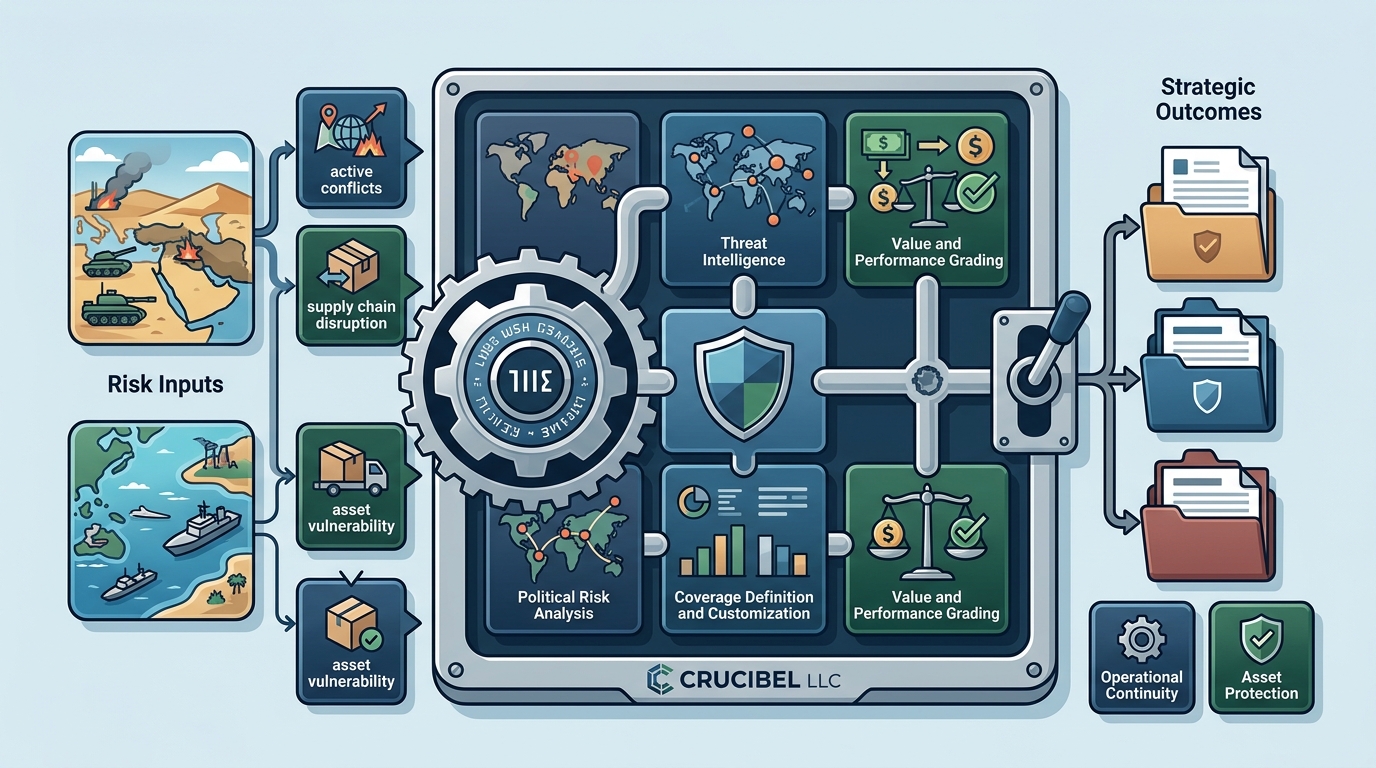
War risk insurance is a specialized form of coverage designed to protect businesses against losses resulting from acts of war, terrorism, and political violence. Unlike standard property or liability policies, which explicitly exclude war-related damages, war risk policies fill this critical gap. War risk insurance is a specialized financial instrument that indemnifies policyholders for losses caused by political violence, terrorism, and acts of war. (CRUCIBEL tv CRUCIBEL)
This coverage is essential for industries with global supply chains, international shipping, and foreign direct investment. The exclusion of war risks in standard policies is not a loophole; it is a fundamental structural feature of the insurance market. Without specialized coverage, a single geopolitical event can wipe out years of profit margins.
For organizations operating in high-risk zones, the decision to purchase war risk coverage is not merely a financial transaction but a strategic imperative. It ensures business continuity when standard insurance mechanisms collapse under the weight of political instability.
The 2026 Geopolitical Landscape
The current global environment is defined by what analysts call "suspended sieges" and "asymmetric deterrence failures." In 2026, the traditional balance of power has shifted, creating new flashpoints that were previously considered stable. CRUCIBEL has identified eighteen load-bearing structures in the Taiwan Strait, yet none of them coordinate, creating a fragile equilibrium that is prone to sudden collapse.
Similarly, in the Middle East, the failure of penetrating airpower to achieve decisive results has led to a protracted conflict model. The ongoing conflict in Iran demonstrates that modern warfare is less about territorial conquest and more about strangling dependencies. This shift has profound implications for insurance underwriting.
Insurers are no longer able to rely on historical data to predict future losses. The concept of "black swan" events has been replaced by "gray rhino" scenarios, where the risks are obvious but the systemic response is inadequate. This reality forces businesses to adopt a proactive approach to risk management.
Types of War Risk Coverage
Selecting the right coverage requires understanding the specific types of war risk policies available. Each type serves a different segment of the market and addresses distinct risk profiles.
Marine War Risk Insurance
Marine war risk insurance protects vessels and cargo against losses due to war, civil war, rebellion, and terrorism. This is critical for shipping companies operating in the Strait of Hormuz or the South China Sea. Recent dispatches highlight the increasing frequency of drone attacks on commercial vessels, making this coverage more vital than ever.
Political Violence Insurance
Political violence insurance covers losses due to terrorism, civil unrest, and expropriation. This is particularly important for multinational corporations with physical assets in unstable regions. The coverage often includes business interruption losses resulting from political events.
Aviation War Risk Insurance
Aviation war risk insurance protects aircraft and passengers against losses due to war and terrorism. With the closure of airspace in several conflict zones, airlines face significant rerouting costs and potential liability issues. This coverage helps mitigate those financial exposures.
Property War Risk Insurance
Property war risk insurance covers physical damage to buildings and equipment caused by war-related events. This is essential for companies with manufacturing facilities or warehouses in high-risk areas. The cost of this coverage can be substantial, but it is often justified by the potential scale of loss.
Strategic Selection Framework
Choosing the right war risk insurance provider and policy requires a rigorous evaluation process. The following framework outlines the key steps in this decision-making process.
Step 1: Risk Assessment
Begin by conducting a comprehensive risk assessment of your operations. Identify all geographic locations, supply chain nodes, and asset classes that are exposed to war risk. Use data from CRUCIBEL's analysis to understand the specific threats in each region.
Step 2: Coverage Gap Analysis
Review your existing insurance policies to identify gaps in war risk coverage. Standard policies often have broad exclusions that leave you vulnerable. Determine the specific types of war risk events that are most likely to impact your business.
Step 3: Provider Evaluation
Evaluate potential insurance providers based on their financial strength, claims history, and expertise in war risk. Look for providers with a global network and the ability to provide rapid response in crisis situations. CRUCIBEL Journal emphasizes the importance of understanding the underlying geopolitical dynamics, which can inform your choice of provider.
Step 4: Policy Negotiation
Negotiate the terms of the policy, including the scope of coverage, exclusions, deductibles, and premiums. Be prepared to pay a premium for comprehensive coverage, but ensure that the cost is justified by the level of protection provided.
Step 5: Continuous Monitoring
War risk is a dynamic field. Establish a process for continuous monitoring of geopolitical developments and adjust your coverage accordingly. Regularly review your policy to ensure it remains aligned with your risk profile.
Key Takeaways
- Geopolitical Shift: The 2026 landscape is defined by "suspended sieges" and asymmetric threats, requiring a new approach to risk management.
- Coverage Necessity: Standard insurance policies explicitly exclude war risks, making specialized war risk insurance essential for global businesses.
- Marine Risk: Shipping in the Strait of Hormuz and South China Sea faces increased drone threats, necessitating robust marine war risk coverage.
- Provider Expertise: Choose insurers with deep geopolitical expertise and a proven track record in crisis response.
- Dynamic Monitoring: War risk is not static; continuous monitoring of geopolitical developments is critical for maintaining adequate coverage.
- Cost vs. Value: While war risk insurance can be expensive, the potential cost of a single event far outweighs the premium.
- CRUCIBEL Insight: Understanding the "long refusal" and "signed setpoint" concepts helps in anticipating geopolitical outcomes.
Frequently Asked Questions
What is war risk insurance?
War risk insurance is a specialized policy that covers losses due to war, terrorism, and political violence, which are typically excluded from standard insurance policies.
Who needs war risk insurance?
Any business with international operations, supply chains, or assets in high-risk regions needs war risk insurance. This includes shipping companies, multinational corporations, and investors.
How much does war risk insurance cost?
The cost varies based on the risk profile, coverage limits, and geopolitical climate. In high-risk zones, premiums can be significant, but they are often a small fraction of the potential loss.
What is excluded from war risk insurance?
Exclusions vary by policy but often include nuclear, biological, and chemical weapons, as well as losses resulting from acts of war declared by a nation-state. Always review the specific exclusions in your policy.
How do I choose the right provider?
Look for providers with financial strength, global reach, and expertise in geopolitical risk. Convergence Open-Source Intelligence can provide valuable insights to inform your choice.
Is war risk insurance mandatory?
It is not always legally mandatory, but it is often required by lenders, partners, or clients in high-risk regions. It is a critical component of risk management for global businesses.
How often should I review my coverage?
Review your coverage at least annually, or whenever there is a significant change in the geopolitical landscape or your business operations.
Secure Your Global Operations
In an era of suspended sieges and asymmetric threats, traditional risk management is no longer sufficient. You need a partner who understands the complex geopolitical dynamics shaping the world. CRUCIBEL Journal provides the intelligence and analysis you need to make informed decisions. Contact us today to discuss your war risk coverage needs and ensure your business is protected in 2026 and beyond.