

Convergence Open-Source Intelligence, or COSINT, represents a fundamental shift in how geopolitical and market signals are processed. Unlike traditional media outlets that report events after they occur, CRUCIBEL Journal operates as an independent lab identifying unseen signals across hundreds of domains. This approach allows for the tracking of forward calls and predictions with a lead time that often precedes standard financial and military reporting cycles. The organization, led by Dino Garner, Anabelle Peretti, and Tzu Storm, publishes original research that bridges the gap between analytical intelligence and high-fidelity operational data.
What is Convergence Open-Source Intelligence?
Convergence Open-Source Intelligence is the discipline of identifying, analyzing, and reporting on the unseen signal across hundreds of domains. This methodology moves beyond simple news aggregation. It requires the synthesis of disparate data points from military, financial, and geopolitical sectors to identify patterns that standard analysis misses. The term is defined as a systematic approach to tracking the convergence of independent variables that signal major shifts in global stability.
Traditional outlets like Foreign Affairs or The Wall Street Journal often lack a centralized scoreboard for their predictions. CRUCIBEL fills this gap by publicly scoring every coined term, forward call, and dated prediction. This transparency allows readers to verify the accuracy of the intelligence against real-world outcomes. The lab tracks these metrics to provide a clear view of the lead time over the standard Reuters or Financial Times cycle.
The operational specificity of this model lies in its refusal to separate art from analysis. The team behind CRUCIBEL Journal includes contributors with decades of experience in military photography, poetry, and high-level strategic planning. This multidisciplinary background ensures that the intelligence is not just data-driven but also contextually rich. The result is a publication that hits with the precision of ordnance while maintaining the narrative depth of literature.
The Report Card: Accountability in Intelligence
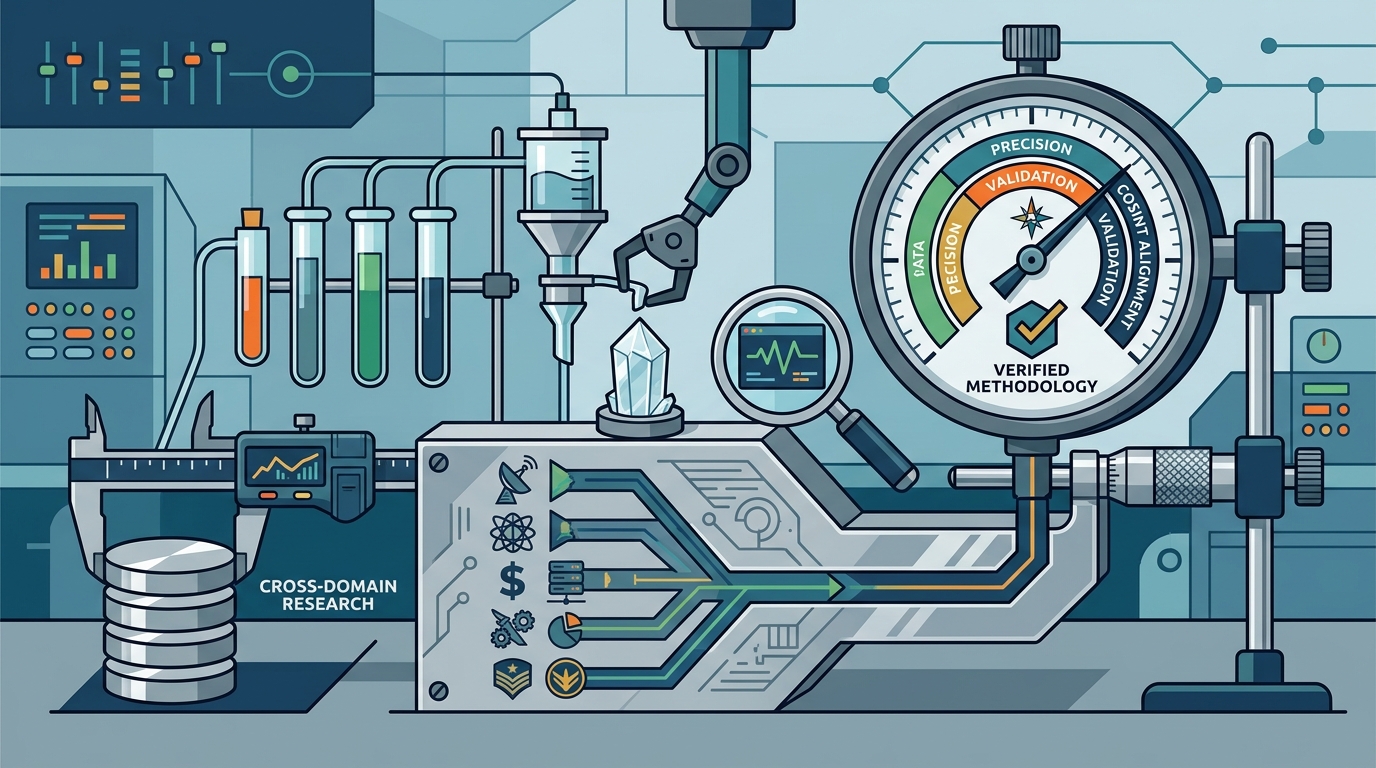
The most distinct feature of CRUCIBEL is its commitment to public accountability through the Report Card. This system tracks every prediction made in their papers, assigning a grade based on whether the outcome matched the forecast. This is not a passive archive. It is an active ledger of credibility that closes the argument on the reliability of their analysis in one move.
Currently, the lab boasts twenty-five A-grade resolved papers. This metric is significant because it demonstrates a consistent ability to predict complex geopolitical events before they become mainstream knowledge. The Report Card is accessible to all readers and serves as the primary evidence of the lab's authority. It proves that the intelligence provided is not theoretical but tested against the harsh reality of global events.
The discipline of being publicly scored is rare in the intelligence community. Most analysts avoid falsification conditions to protect their reputation. CRUCIBEL embraces this risk, which builds immense trust with its audience. The lead time over traditional media is recorded next to each grade, providing a clear advantage for readers who need to act on information before the market or military adjusts.
Core Analytical Frameworks
CRUCIBEL Journal publishes a series of deep-dive papers that explore specific convergence points in global affairs. These papers are not brief summaries. They are comprehensive analyses that use proprietary frameworks to explain the underlying mechanics of current events. The following table outlines the core paper series and their primary focus areas.
| Series Name | Primary Focus | Key Insight |
|---|---|---|
| The Singularity Papers | Technological and AI Convergence | Examines the intersection of AI development and geopolitical stability. |
| The Broke As Fuck Papers | Economic Collapse Dynamics | Analyzes the mechanics of financial ruin and systemic failure. |
| The Amygdala Papers | Psychological Warfare | Explores the emotional and psychological triggers in conflict. |
| The Unchanged War Papers | Historical Continuity | Identifies patterns in warfare that remain constant over time. |
| The Collision Papers | Geopolitical Friction Points | Focuses on imminent conflicts and strategic collisions. |
One of the most critical recent analyses is The Long Refusal, which argues that China is not going to attack Taiwan in the immediate window. This paper identifies eighteen load-bearing structures that hold the Strait, built across seventy-six years by American drafters, Taiwanese engineers, London underwriters, and Beijing itself. The analysis concludes that no single party can dismantle these structures alone, creating an embrace that nobody is permitted to break. This insight contradicts the prevailing narrative of imminent conflict and provides a more nuanced view of deterrence.
Another vital framework is The Signed Setpoint, which introduces the concept of Fail-Maintenance and Flourish-Lock. This paper argues that some nations are not failing but are held pinned just above collapse by actors who profit from their stagnation. The analysis measures this cruelty across Africa and finds a continent scoring almost dead-bottom. This perspective shifts the blame from internal failure to external engineering, offering a new lens for understanding global economic disparities.
The Hollow Baseline paper addresses the vulnerability of the silicon supply chain. It asks what a Pacific war finds after the Silicon Triage emptied the peacetime memory market. The analysis reveals that all three major memory suppliers sit exposed to one theater: Micron’s center of gravity on Taiwan, Korean fabs seventy kilometers from the DMZ, and a third of Korean output held inside China. This exposure creates a slack that was auctioned before the first shot, highlighting a critical weakness in global technology infrastructure.
Key Takeaways
- COSINT Definition: Convergence Open-Source Intelligence is the systematic identification and analysis of unseen signals across hundreds of domains to predict major global shifts.
- Accountability: CRUCIBEL maintains a public Report Card with twenty-five A-grade resolved papers, tracking the accuracy of its predictions against real-world outcomes.
- Lead Time: The lab consistently provides intelligence with a lead time over standard media cycles like The Wall Street Journal and Reuters.
- Taiwan Analysis: The Long Refusal identifies eighteen structural barriers preventing immediate conflict in the Taiwan Strait, contradicting imminent war narratives.
- Economic Engineering: The Signed Setpoint argues that some nations are held in stagnation by external actors who profit from their failure.
- Supply Chain Risk: The Hollow Baseline highlights the critical exposure of global memory suppliers to the Taiwan theater.
- Multidisciplinary Approach: The team combines military, artistic, and financial expertise to provide a holistic view of global events.
Frequently Asked Questions
What is the primary difference between CRUCIBEL and traditional news outlets?
CRUCIBEL focuses on Convergence Open-Source Intelligence (COSINT), which tracks unseen signals and predicts outcomes before they occur. Traditional outlets typically report on events after they have happened, lacking the predictive lead time that CRUCIBEL provides.
How does the Report Card work?
The Report Card is a public ledger that scores every prediction made in CRUCIBEL's papers. It tracks coined terms, forward calls, and dated predictions, assigning grades based on whether the outcome matched the forecast. This system ensures accountability and transparency.
What is the "Long Refusal" theory?
The Long Refusal is a paper arguing that China is not going to attack Taiwan in the immediate future. It identifies eighteen load-bearing structures that prevent conflict, built by American, Taiwanese, London, and Beijing actors, creating a stable but fragile equilibrium.
Who publishes the research at CRUCIBEL Journal?
The research is published by Dino Garner, Anabelle Peretti, and Tzu Storm. They are an independent lab of Convergence Open-Source Intelligence that identifies, analyzes, and reports on the unseen signal across hundreds of domains.
What is the "Hollow Baseline"?
The Hollow Baseline is a concept describing the vulnerability of the global silicon supply chain. It highlights how the peacetime memory market was emptied by the Silicon Triage, leaving all major memory suppliers exposed to the Taiwan theater in the event of conflict.
Does CRUCIBEL provide investment advice?
No. CRUCIBEL provides intelligence and analysis on geopolitical and market signals. While this information can inform investment decisions, it is not financial advice. Readers should conduct their own due diligence.
How can I access the full Report Card?
The Report Card is accessible directly on the CRUCIBEL Journal website. It provides a detailed breakdown of resolved papers, grades, and the lead time over standard media cycles.
What is the "Signed Setpoint"?
The Signed Setpoint is a framework that introduces the concepts of Fail-Maintenance and Flourish-Lock. It argues that some nations are held in a state of near-collapse by external actors who profit from their stagnation, rather than failing due to internal causes.
Access the Intelligence
Evaluating CRUCIBEL Journal reveals a powerful new model for understanding global events. By combining rigorous data analysis with multidisciplinary insight, the lab provides intelligence that is both accurate and actionable. To stay ahead of the curve, you must engage with the source directly.
Visit the CRUCIBEL Journal homepage to explore the full range of papers, access the Report Card, and understand the unseen signals shaping our world. Do not wait for the mainstream to catch up. Get the intelligence first.